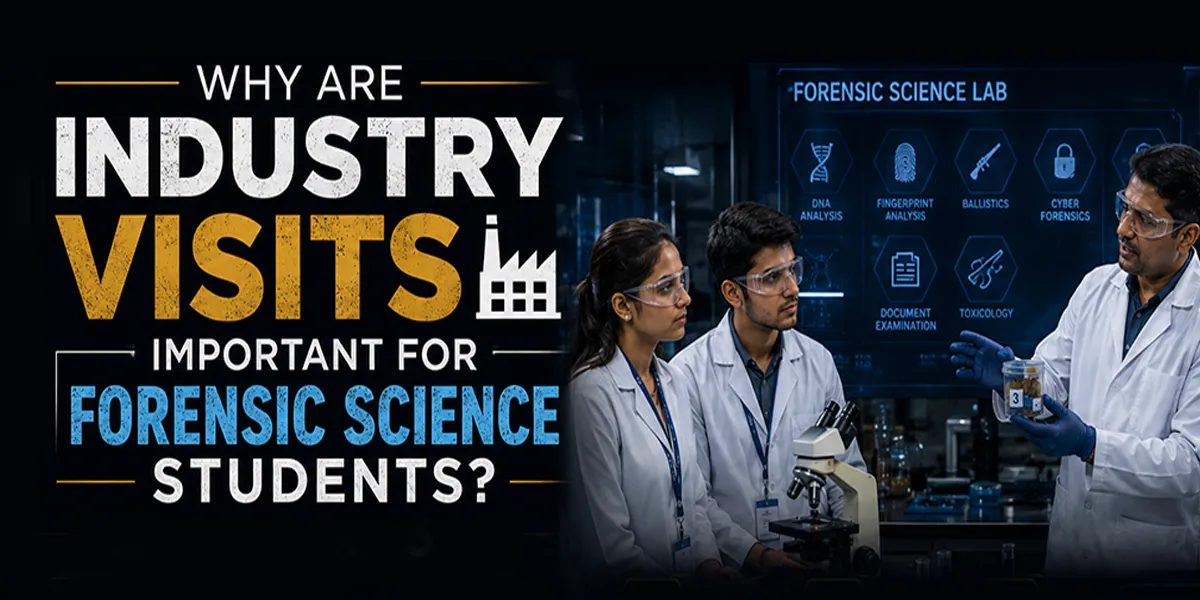
Forensic science is a fascinating field of study that requires both academic and practical knowledge. In one's studies, one may explore areas such as ballistics, DNA analysis, fingerprint detection, and other subjects relevant to criminal investigation. One of the essential components of training in the field of forensic science is the theoretical aspect of the discipline. The other part of the process is connected with practice – experimenting in laboratories, engaging in research studies, working in investigative units, and professional environments.
Therefore, it is apparent that industry visits are significant for students because they provide them with an opportunity to gain insight into the industry, understand how things work in practice, build relationships with professionals, and connect theoretical knowledge with real-life experiences.
Importance of industry visits for forensic science students
1. Linking classroom theory with real applications
The greatest benefit industry visits provide to the students is to make academic concepts easier to understand.
Students might know about DNA profiling in a classroom setting and grasp the scientific principles behind it. But on-the-ground witnessing the way biological evidence is processed, analyzed, documented, and interpreted in a professional environment offers an entirely new perspective.
Industry exposure encourages students to raise an important question: where does the knowledge being taught in class fit into an actual forensic workflow? The moment students start taking interest and form a bond, then in the true sense, theoretical concepts often become meaningful.
2. Understanding how forensic laboratories actually operate
When it comes to the operational level, there is a huge difference between professional laboratories and academic teaching laboratories.
Students can clearly observe different stages of movement of evidence right from receiving and documenting exhibits to examination, analysis, quality checks, reporting, and storage. They can also able to understand why laboratories comply with strict handling guidelines when handling evidence.
Such exposure makes students aware of the importance of:
- Standard operating procedures
- Documentation of the evidence
- Chain of custody
- Laboratory safety
- Quality control
- Quality assurance
- Confidentiality
- Scientific reporting
- Maintenance of the instrument
All of these are professional practices which students learn or understand theoretically but appreciate them much more clearly after seeing them in operation.
3. Exposure to advanced forensic technology
Due to continuous growth and evolution of technology, forensic science is becoming more and more tech-driven. A lot of professionals are now working with sophisticated analytical instruments, imaging systems, DNA technologies, databases, digital forensic platforms, and specialized software.
Through industry visits, students get exposed to technologies that might not be available for extensive classroom demonstrations.
For example, students who are interested in digital forensics will learn better after witnessing how professionals examine electronic devices and digital evidence.
Practical exposure helps students to grasp the gist of the direction in which the profession is evolving.
4. Learning directly from professionals
You can gain information from books and lectures, but when it comes to experience, technical know-how, skills, and ground realities, only the professionals can provide it. During the industry visits, students get a chance to interact with forensic scientists and other specialists. Conversations with professionals will reveal various things like what exactly working in the field looks like, including the challenges that might not appear in textbooks.
Students can learn about various things:
- Day-to-day responsibilities
- Needed technical skills
- Expectations of the workplace
- Common obstacles
- Progression in a career
- Forensic science specializations
- Research opportunities
- Additional qualifications and certifications
With the help of these conversations, students are able to make more informed decisions about their future career growth.
5. Understanding different career opportunities
Most of the students initially connect forensic science with a crime scene investigation or police work. But that is only a small part of it; the field really encompasses a much wider range of professional roles:
- DNA analysis
- Forensic biology
- Forensic toxicology
- Forensic chemistry
- Examination of fingerprints
- Examination of documents
- Forensic anthropology
- Forensic odontology
- Digital forensics
- Cybercrime investigation
- Crime scene investigation
- Forensic research
- Laboratory quality equipment
Such professional work in these roles can really help students to identify their specializations which match their interests and capabilities.
Conclusion
There is no substitute for practical training and industry exposure in any forensic science profession. Industry visits are an integral part of it, which exposes students to the professional environment. Helping students to understand the way forensic evidence is handled, how laboratories operate, which technologies professionals use, and what skills employers expect. Most importantly, letting students see the connection between what they learned in their classroom and what they may eventually do professionally.
If you want to pursue a career in forensic science, then choosing the best forensic science colleges is essential. When it comes to that, look no further than Lloyd Institute of Forensic Science, as it offers courses in bachelor's, master's, and diploma.