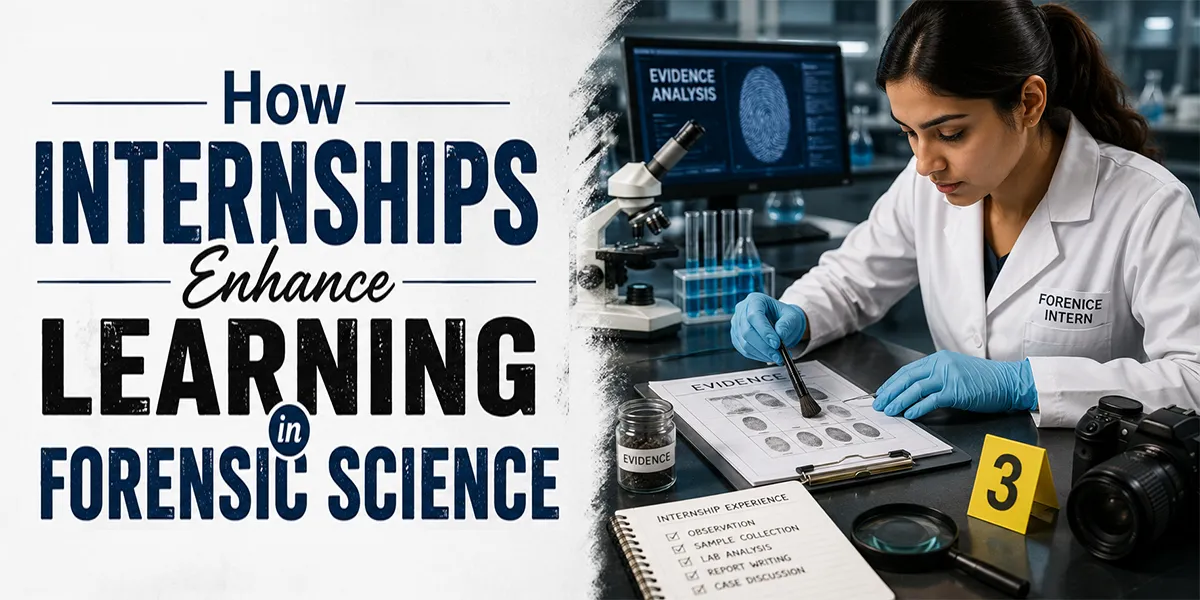
Internships in forensic science, which last one to four months, provide an opportunity to experience what it's like to work in a specific field. Internships are extracurricular and often occur during the summer break, in contrast to placement years, which are incorporated into your degree. An internship in forensic science will provide you with a wealth of knowledge on the following:
- The vision, values, and culture of the company
- Using sophisticated software and hardware
- Being employed by a small, medium, or large company
- Working together with various teams
And you'll be compensated! Additionally, internships are a fantastic way to develop your abilities, expand your resume, and establish contacts that may lead to future employment opportunities.
Why should you do a forensic science internship?
An internship in forensic science throughout college provides students with priceless practical experience, enabling them to apply what they have learned in the classroom in settings such as crime labs or medical examiners' offices. In order to better prepare students for the needs of the field, it helps develop both soft skills like teamwork and communication, as well as technical abilities like DNA analysis and fingerprinting.
Additionally, internships build your resume for future job applications or graduate programs, increase employability, and offer significant networking opportunities. They assist students in defining their career goals and, in certain situations, even lead directly to employment offers by providing insight into many facets of forensic science. All things considered, an internship is a wise and calculated move toward a prosperous career in forensic science.
The fact that you're not often expected to be pursuing a degree in forensic science or criminology is another fantastic aspect of completing a forensic science internship! All degree disciplines are eligible for internships.
Additionally, forensic scientists are typically in high demand. The need for skilled forensic scientists is being driven by the complexity of contemporary investigations and the growing reliance on scientific evidence in criminal trials. Although it can be hard to enter the field, career prospects are generally favorable.
What type of forensic science opportunities are there?
There are a lot of possibilities available, so before you start looking for an internship, make sure you know what you want from it. Here are some suggestions:
Digital forensics. Involves looking into (and frequently recovering) evidence from digital devices, primarily in computer crime situations.
Forensic anthropology. Examining human remains can assist in solving a crime or explaining how someone passed away.
Forensic archaeology. The investigation and analysis of historical artefacts or human remains.
Forensic botany. In criminal cases, plant science is typically used to link a victim to a perpetrator or crime scene.
Forensic engineering. Concerned with explaining the failure of certain systems or goods in the event of property damage or human injury.
Forensic linguistics. The provision of linguistic evidence, comprehension of the language used in court proceedings, and comprehension of the written law's language are the three primary uses.
Forensic pathology. A branch of pathology dedicated to determining the cause of death.
Forensic psychology. The relationship between psychology and the legal system, comprehending the psychology underlying criminal behavior.
Forensic toxicology. To find specific compounds, a forensic toxicologist studies samples of tissue or bodily fluids.
Who could I work for?
During or after your forensic science course, you have a lot of options to secure an internship. Some of the best avenues include Premier Central and Government Institutions, Private firms, and specialized institutes. Let’s have a look in detail –
Premier Central & Government Institutions
- NFSU (National Forensic Sciences University): You can get opportunities to work at different campuses as the National Forensic Sciences University organizes summer and winter internship programs for forensic students.
- BPR&D (Bureau of Police Research & Development): BPR&D provides internship opportunities to forensic students who are enrolled in PG/Ph.D. in Criminology, Forensic Psychology, and Cyber Forensics.
- Central Bureau of Investigation: CBI hosts an internship scheme allowing students to work on cyber/digital forensics and associated subjects at the CBI Academy.
- State Forensic Science Labs (SFSLs): Several local laboratories frequently invite students for project-based training.
Private Firms & Specialized Institutes
- SIFS India (Delhi): Sherlock Institute of Forensic Science, Delhi, which is also known as SIFS (Delhi), invites forensic science degree holders for online as well as physical case-based forensic internships. During the internship, they cover document analysis, toxicology, biology, and cyber forensics.
- IFS (Institute of Forensic Science, Pune): IFS Pune offers short-term as well as month-long internship training programs on live cases, evidence handling, and forensic reports.
- Private Cyber/Digital Labs: Firms like Royal Forensics Pvt. Ltd. (Nagpur/Remote) or Tathya Forensic Wing Federation take in interns to assist with data recovery, cyber investigations, and crime scene tracking.
Conclusion
In India, you can find several paid & unpaid internship opportunities at private firms, specialized institutes, and Central & Government Institutions. Most of the colleges, including Lloyd Institute of Forensic Science, focus on creating opportunities for forensic science students with the motive to develop soft and technical skills. Additionally, it provides a chance to create network opportunities, boost employability, etc.