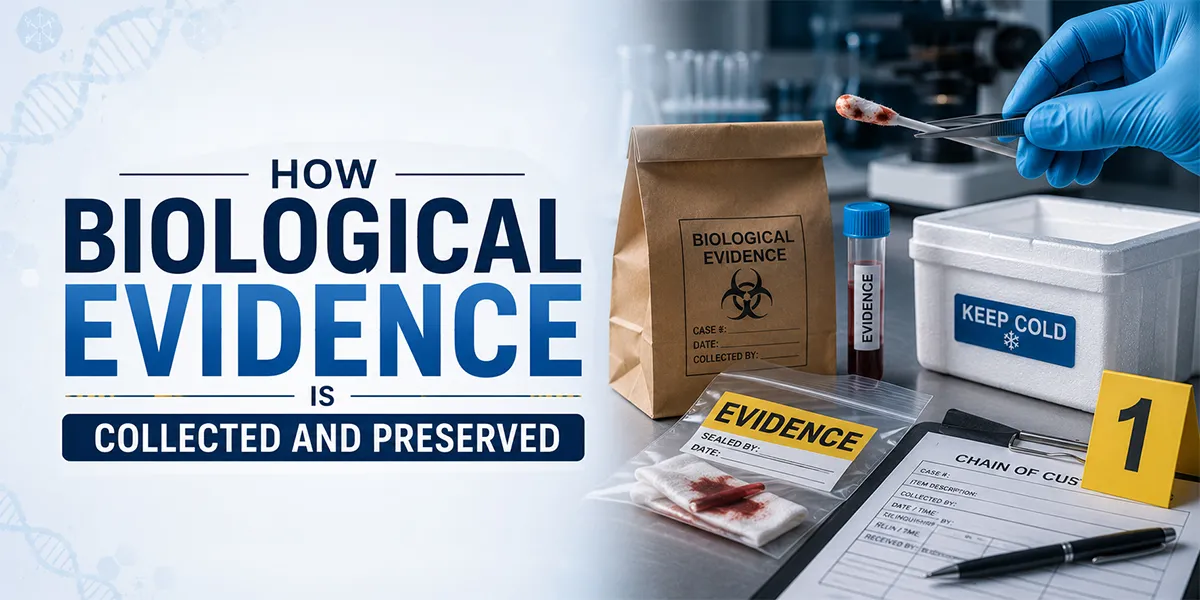
The investigation of biological evidence plays a very important part in today's forensics. Investigators can use the evidence to assist with the identification of a suspect, link a suspect to a crime scene, and, in some cases, exonerate someone who is found to be innocent. Biological evidence can be in the form of human bodily materials such as blood, saliva, semen, hair, skin cells, bones, tissues, or fluids that may contain DNA. The proper collection and preservation of biological evidence is critical because a single mistake can render the biological evidence unusable, thus preventing its use as a viable source of forensic evidence.
What is Biological Evidence?
Biological evidence is any biological material located at the crime scene that can be analyzed for forensic purposes. Biological evidence usually contains some sort of DNA and thus can be a unique means of identification for a person.
Types of biological evidence
Common types of biological evidence include:
- Blood
- Saliva (i.e., saliva found on cigarettes, bottles, bite marks)
- Semen (in a sexual assault case)
- Hair (provided the hair is intact and has a root attached to it)
- Skin cells (i.e., from an attacker's hands on a weapon or an item of clothing)
- Sweat/body fluids
- Teeth/bones (in unidentified remains)
Forensic scientists will analyze biological evidence to establish a link between a suspect and a victim or the scene of the crime.
Importance of collecting biological evidence
The collection and preservation of biological evidence is crucial to its value. The improper collection or handling of biological evidence can result in several problems:
- Contamination
- DNA degradation
- Loss of the biological evidence
- Incorrect forensic results
- Motion to suppress the biological evidence in court
Therefore, crime assessment must ensure that forensic professionals use an appropriate, accurate, and thorough approach when collecting and preserving biological evidence in order to maximize its value.
A Quick Guide to Collecting Biological Evidence
Step 1: Make Sure the Scene is Safe
The first step in collecting biological evidence is to make sure the area is secured so it will not be contaminated. This means that everyone (except authorized personnel) should be kept away from the crime scene.
To avoid any transfer of DNA from an investigator to the collected biological evidence, an investigator must wear personal protective gear, such as the following:
- Gloves
- Face masks
- Shoe covers
- Protective suits
Step 2: Document Evidence
Every piece of biological evidence needs to be documented prior to being collected. Documenting evidence can include:
- Photographing the evidence
- Videotaping the evidence
- Sketching the crime scene
- Writing notes about the evidence
To accurately depict the location of each piece of biological evidence, the investigator must take pictures of the same piece of evidence from several different angles. Example:
- Blood stains were found on a wall
- Hair found on a bedspread
- Saliva found on a drinking glass
Thorough documentation will allow investigators to recreate the crime scene when needed to complete their investigation.
Step 3: Locate Biological Evidence
Investigators will look for visible and non-visible biological evidence.
Visible Evidence Includes:
- Blood stain
- Hair
- Tissue fragment
In some instances, biological evidence cannot be seen with the naked eye and will need to be examined with the use of special techniques to make the evidence visible.
The two most common techniques used are the following:
- Alternate light sources
- Ultraviolet (UV) light
- Certain chemicals
An example of a chemical used to search for biological evidence is luminol. It is commonly used to help locate cleaned-up blood stains.
Step 4: Collection Methods
When collecting biological material, a separate method must be used for each type of material.
Blood Collection
Wet Blood
- Wet blood is collected with a sterile cotton swab and air-dried before being placed in a container.
Dry Blood
- Dry blood is removed from its source using a sterile scraping instrument or a moistened swab.
- Clothing that has blood on it can also be taken for forensic examination.
Saliva Collection
- Saliva may present itself in many common items, such as:
- Cigarettes
- Bottles
- Envelopes
- Bite marks
- A sterile swab will be used to collect any saliva sample. The swab will then be air-dried and placed in packaging for forensic analysis.
Hair Collection
- Hair can be collected by using:
- Forceps
- Tape lifts
- Folds of clean paper
- The best hair to collect for DNA determination is that with a follicle (root) because it contains nuclear DNA.
Biological Evidence of Semen and Sexual Assault
Biological evidence is extremely time-sensitive and of great importance during a sexual assault investigation.
Evidence collection can occur on:
- Swabs of the victim’s body
- Clothing
- Bedding
Sexual assault evidence collection kits are widely utilized by hospitals and forensic laboratories.
Skin Cell or Touch DNA
Even from just touching something, an individual can leave skin cells behind.
Touch DNA evidence can be collected from the following:
- Weapons
- Door handles
- Cell phones
- Steering wheels
Sterile swabs are used to gently rub (collect) the microscopic material on the surface of an object.
Packing of biological evidence
Typically, biological evidence is packaged in one of the following containers:
- Paper bags
- Envelopes
- Cardboard boxes
Plastic bags should be avoided because they trap moisture, which will result in bacterial growth and degradation of DNA.
Separate packing
Additionally, each piece of evidence must be kept in its own separate container to avoid cross-contamination. For example:
- Bloody clothing should not come into contact with another piece of evidence.
- Swabs from different crime scenes should be sealed in their own packages.
Marking of Packaging
Each package must contain the following:
- Case number
- Date/time of collection, name of the collector
- Description of the evidence
- The location it was collected from
Accurate marking will allow for proper tracking of the items.
Preventing Contamination of Biological Evidence
To prevent contamination of samples, the investigator should change their gloves frequently and use sterile equipment when collecting samples.
Clear out the exhibit.
There is a possibility of growth of mold and bacteria on biological evidence that is wet. Consequently, all evidence is dried prior to being placed into storage.
Some examples of wet evidence
- Wet clothing
- Swabs taken from blood
- Wet textiles
Forensic laboratories generally employ drying rooms with controlled airflow to facilitate the drying of wet evidence.
Refrigeration and Freezing
There are some types of biological evidence that need to be maintained in a cold environment.
Refrigerated
- Blood
- Tissue samples
Frozen
For extended-term preservation of DNA.
Cold environments impede the growth of bacteria and prevent decay of biological samples.
Avoiding contamination
When processing evidence, the investigator will change gloves after every sample and use sterile tools every time they handle a sample.
Some examples of common sources of contamination are the following:
- Touching the evidence with your hands
- Coughing or sneezing on the evidence
- Using the same instruments as others who have handled the evidence.
- Improper storage or packing of the evidence
It is essential to maintain a clean environment in every phase of the investigation.
Chain of custody
Chain of custody is an officially recorded account of who has handled the evidence starting from the time of collection to the presentation before the jury in a court. The details are as follows:
- Who collected the evidence
- Who transported the evidence
- Where it has been stored
- Who analyze the evidence
If a chain of custody has been broken, the evidence may be deemed inadmissible by the judge.
The role of Forensic Laboratories
Once biological evidence has been collected, the evidence then will be sent to a forensic laboratory for analysis. Scientists perform various types of analysis, including
- DNA profiling
- Toxicology testing
- Blood assays
- Serological examination
Using advanced technologies like PCR (polymerase chain reaction) allows scientists to conduct analyses on all amounts of DNA.
Challenges to Handling Biological Evidence
Despite the progress made, investigators continue to face many challenges when collecting biological evidence, including
Environmental exposure
Biological samples may be destroyed if exposed to the environment (heat, sunlight, moisture, and/or rain).
Contamination
If physical evidence is improperly handled, foreign DNA may be transferred to the evidence.
Decomposition
Older or decomposed samples may provide limited results when analyzing DNA.
Limited supply
In some scenarios, only a very small amount of biological material will be available for analysis.
Using proper training and modern forensic techniques can help overcome these barriers.
The significance of biological evidence
Biological evidence has revolutionized criminal justice. Biological evidence can be used to
- Identify suspects
- Solve cold cases
- Identify victims of disasters
- Exonerate innocent people
- Establish linkages between the perpetrator and victim
Because DNA evidence is viewed as one of the most valid forms of forensic evidence when properly handled, it has become one of the most valuable tools for law enforcement agencies.
Conclusion
Biological evidence collection and preservation are crucial components of forensic sciences. Every procedure performed during the investigation, from the collection of evidence at the crime scene through the analysis done by the laboratory, must be conducted using validated scientific methodologies. If evidence is handled improperly, it may become contaminated, the DNA integrity may be compromised, and the subsequent analysis may yield unreliable results in court.
As forensic technologies continue to develop, even minute biological traces can yield essential evidence for the investigation of crimes. The success of forensic examination results, however, depends significantly on how carefully the evidence was collected, packaged, preserved, and documented. Therefore, investigators trained as forensic experts are instrumental in ensuring that the integrity of biological evidence is being maintained and in providing assistance to the justice system.