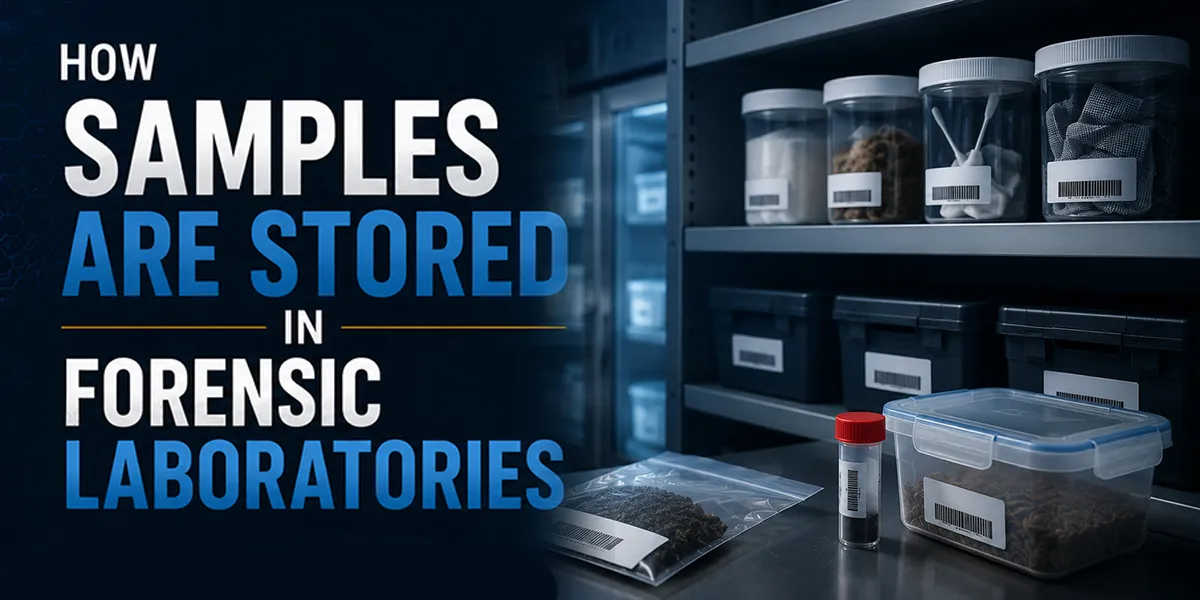
The results of forensic tests are only as accurate as the procedures used to analyze samples. Proper evidence storage is essential to the proper analysis of evidence, both using advanced scientific methods to analyze evidence and following the appropriate protocols to store samples. Failure to store samples correctly can lead to contamination, degradation, misplacement, or mishandling of forensic evidence, resulting in potentially erroneous conclusions being made during the course of investigations and possibly resulting in changes to the outcome of court cases.
Different forms of forensic evidence require different methods of storage. For example, each type of sample (e.g., blood, DNA, chemical materials, firearms, and digital evidence) requires different types of environments to maintain the samples' integrity throughout the testing process.
Additionally, forensic laboratories must ensure the accuracy of each sample during the entire testing process, from the time of collection through testing and through trial.
This blog will detail how forensic samples are stored, the methods used to store samples, and the challenges presented with maintaining the integrity of evidence, as well as the impact of maintaining the integrity of samples on the overall quality of evidence.
Importance of proper sample storage in forensic laboratories
In forensic labs, storing all types of forensic samples correctly is of utmost importance to ensure the reliability of those samples and prevent them from being subject to contamination or degradation. Evidence collected from the crime scene needs to be maintained for potential use in the court system for months and often years after it was collected. Failure to store evidence properly will lead to loss of important information and may compromise the case in court.
Stored properly, evidence should be able to:
- Handle and maintain the original condition of evidence.
- Prevent contamination.
- Prevent tampering or stealing of evidence.
- Maintain the chain of custody.
- Allow for accurate scientific analysis.
- Maintain legal admissibility in court.
In general, forensic evidence should be scientifically valid throughout the entire investigative process. Small changes in the environment (including, but not limited to, heat, moisture, and exposure to light) can alter certain kinds of samples and create damage.
Types of Forensic Samples
Different types of forensic evidence require different methods of storage. Some commonly found examples are:
- Biological Samples
These would include:
- Blood
- Saliva
- Semen
- Hair
- Tissue
- Bone
- DNA samples
Biological samples are very sensitive and are the most likely to degrade if not stored correctly.
- Chemical Samples
Chemical evidence can take a variety of forms, such as:
Evidence must be collected and retained in a secure and controlled environment; otherwise, chemicals could react with one another or evaporate.
- Trace Evidence
Trace evidence consists of extremely small pieces of evidence that include, but are not limited to:
- Fibers
- Dirt
- Glass
- Paint chips
- Gunpowder residue
Trace samples are routinely collected and stored in small, sealed containers in order to avoid losing or contaminating the samples.
- Firearm/Weapon Evidence
When collecting evidence of weapons, bullets, casings, and/or sharp objects, it is important to properly place and secure all of these items to preserve fingerprints, blood residues, or ballistic markings.
- Digital Evidence
When collecting evidence from digital devices, such as mobile phones, laptops, internal hard drives, or digital storage media (e.g., memory cards), the evidence should be placed in an anti-static environment and secured in such a way as to preserve the integrity of the evidence.
Storage of Evidence After Collection
The first step in the proper storage of evidence is to begin right after the evidence is collected by the investigator(s) and the forensic scientists, according to the appropriate procedures that are used during the collection of evidence at a crime scene.
The following are key steps:
- The investigators and forensic scientists involved will wear gloves and protective clothing.
- Use sterile collection tools.
- Properly label all evidence collected.
- Package separately each piece of evidence collected.
- Record all pertinent information regarding the collection of the evidence.
Each piece of evidence collected will also receive a unique identification number so that laboratories can properly track the evidence as it moves through the investigation process.
Additional consideration must be given to the method of packaging the evidence collected for forensic analysis before it is stored. Different types of materials are used based on the type of evidence collected.
Types of Packaging Materials Used to Store Forensic Evidence
Paper bags/envelopes are frequently used to store biological samples because they allow for air circulation to keep moisture from forming and prevent the growth of bacteria.
Plastic containers
Dry non-biological evidence can be stored in plastic containers or plastic bags.
Evidence boxes
Chemical and volatile liquids are typically stored in air-tight glass containers that prevent leaks, evaporative losses, or contamination.
Anti-static bags
Items that are large in size (e.g., weapons and clothing) are packaged in a specially labeled evidence box. Finally, electronic devices are stored in anti-static bags to prevent damage from static discharge.
Temperature-controlled Storage
Possessing forensic evidence in a manner that preserves its integrity relies heavily on temperature. To ensure that evidence is able to be collected when needed, the laboratory must utilize equipment that allows for the collection of evidence at the proper temperature and in the proper environment.
The following temperature ranges and/or storage methods are typically used by forensic laboratories when collecting evidence:
Refrigeration
Biological samples such as blood and tissue are generally stored within a refrigerator (typically at a temperature range of 2 degrees Celsius to 8 degrees Celsius). Refrigeration slows down the growth of microbes and therefore extends the amount of time before they decompose.
Freezing
Biological evidence that may or will be used to establish DNA profiles can be stored in a freezer (usually at temperatures below -20 degrees Celsius or -80 degrees Celsius) for long periods of time.
Room Temperature
Some forms of dry evidence (such as documents, fibers, and sealed drugs) may be stored in secure lockers at room temperature.
Secure Evidence Rooms
Forensic laboratories maintain evidence with a high degree of security. The security of the evidence storage rooms includes controlled access to authorized personnel only, including the following:
- Locking storage systems
- CCTV (closed-circuit television) surveillance
- Biometric access control (such as fingerprint recognition systems)
- Alarms
- Evidence tracking software
The above security measures prevent unauthorized access, theft, or tampering, thereby preserving the integrity of the evidence collected.
Chain of Custody Support
"Chain of custody" describes the complete documentation of how the evidence was collected, stored, and transferred until it is returned to the court. Each time evidence changes hands, there is complete documentation that includes:
- Who transfers the sample (name)
- The date and time it was transferred
- What was the reason for the transfer
- Where the evidence is being stored
Maintaining a chain of custody ensures there is complete transparency of that evidence and there is proof that the evidence was not tampered with in any way.
Labeling and Documentation
Accurate labeling is necessary when working with forensic evidence. Each sample must be labeled to include:
- Case number
- Sample description
- Date and time collected
- Name of investigator
- Information on how to store the sample
In addition to accurate labeling, labs also keep accurate digital records to facilitate the easy tracking and retrieval of evidence.
Contamination Prevention
Contamination is one of the biggest threats in forensic science. Many forensic labs have strict policies in place to avoid contamination.
Common precautions taken by labs include:
- Using sterile equipment
- Changing gloves often
- Storing samples independently of each other
- Cleaning cleanrooms routinely
- Ensuring that evidence does not have cross-contact
In DNA labs, they frequently have separate rooms and air filter systems to minimize contamination risk.
Long-Term Storage of Evidence
Many ongoing criminal cases remain open for years, and they all need to be stored long-term. The physical remains of the original evidence are usually preserved for later examination and evidence. The methods used for long-term storage may include:
- Deep-freeze biological specimens
- Vacuum-sealed
- Climate-controlled vault
- Digital copies of the evidence
Many jurisdictions have rules to follow regarding long-term storage of evidence.
Challenges in Forensic Sample Storage
Forensic labs are confronted with several difficulties regarding the storage of forensic samples, despite having a good structure in place.
Challenges to Storing Forensic Samples
- Space Constraints
When there are too many cases on hand, the potential for overcrowding can impede the effectiveness of forensic labs.
- Sample Degradation
Biological evidence, even when stored under refrigeration, can continue to biodegrade regardless of the method of storage employed.
- Risk of Contamination
The integrity of the evidence may be compromised due to improper handling of the evidence.
- Technological Issues
With the introduction of digital evidence, the evidence management system must be updated regularly to keep up with new developments in technology.
- Security of Evidence
It is the responsibility of law enforcement agencies to maintain and protect evidence from being damaged or removed from the system.
Modern Technology in Evidence Storage
In order to increase the effectiveness of the storage of forensic evidence, forensic labs have adopted modern technology.
Barcode System for Tracking Evidence
Every piece of forensic evidence received by a forensic lab has a barcode attached to it to enable easy tracking and inventory management.
Computer System for Storing Evidence
Evidence is tracked by computerized systems so that the lab can record its location, recording, and analysis of any and all pieces of forensic evidence.
Smart Storage Systems
Some forensic labs employ automated evidence-locking through computerized access control systems that log who has accessed the evidence.
Environmental Control System Configuration
Forensic labs have installed sensors that monitor relative humidity, temperature, and ambient air quality within the evidence storage area.
Standards, Accreditations, and Evidence Storage
In the United States, to comply with ISO standards and NABL standards, forensic labs are required to follow the same standards at the national level to ensure the identity and quality of the evidence in their custody.
Criteria regarding proper handling and storage of evidence may be found in the following national and international standards organizations:
- ISO (International Organization for Standardization)
- NABL (National Accreditation Board for Testing and Calibration Laboratories)
- ASCLD (American Society of Crime Laboratory Directors)
Adherence to these standards will enhance confidence in the value of evidence obtained by these laboratories.
Ethical and Legal Responsibility
Forensic laboratories have ethical and legal responsibilities regarding the proper storage of their evidence. Improperly handling or losing samples can negatively impact the delivery of justice through the court system.
Forensic laboratories must ensure the following:
- Confidentiality of the evidence
- Documentation of the evidence
- Security of access to the evidence
- Accurate preservation of the evidence
Failure to comply with protocols may lead to the rejection of the evidence when presented in a court.
Conclusion
The storage of forensic samples is an orderly and scientifically controlled process that has a direct effect on criminal investigations and the outcome of judicial decisions. Every piece of evidence (i.e., biological, chemical, physical & digital) requires specific storage methods to maintain its integrity and reliability.
To ensure that their samples do not become contaminated, degraded, or tampered with, forensic laboratories use specialized packaging, temperature-controlled systems, secure evidence rooms, and advanced tracking systems to provide adequate protection to each sample. Proper storage of evidence not only protects the quality of the evidence, but it also strengthens the credibility of forensic science as an investigative tool within the U.S. judicial system.
With the continued advancement of technology, forensic laboratories are implementing smarter and more secure evidence storage techniques, which will help to improve the effectiveness and reliability of criminal investigations found worldwide. The proper storage of evidence is and will continue to be one of the fundamental building blocks of forensic science and all successful legal proceedings.