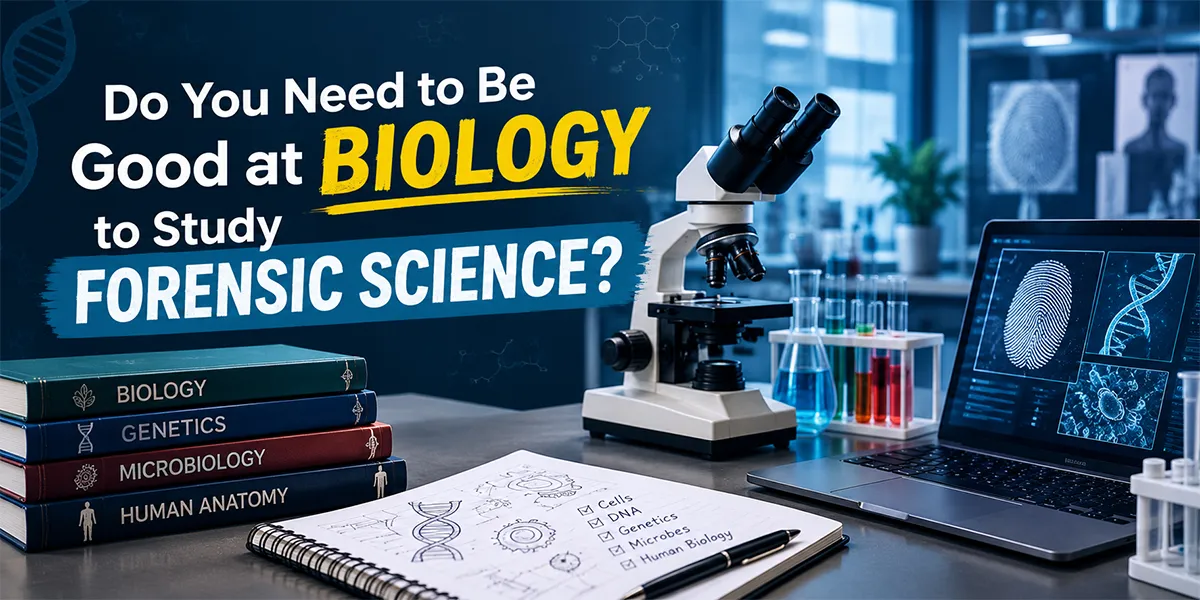
Forensic science is a vast field of study. Biology is certainly important, especially in areas like forensic biology, DNA analysis, serology, and forensic anthropology, but students also encounter chemistry, physics, mathematics, psychology, computer science, and analytical techniques. The importance of each subject is also based on the specialization a student eventually chooses.
This can really help students make a decision about whether or not to study forensic science. Forensic science is a field that students should know more about before they decide to pursue it. By learning more about science, students can figure out if forensic science is the right choice for them.
Why is biology important for forensic science?
It is because of biology that forensic scientists understand the evidence that comes from living organisms. Blood, saliva, skin cells, hairs, tissues, and other biological samples can be collected and analyzed. Likewise, forensic serology also involves the examination of biological fluids and understanding their human characteristics. Having the knowledge and understanding of human biology is also useful when interpreting tissues, injuries, and other biological evidence.
That's why, for students who are interested in laboratory specializations, biology is highly important.
Which areas of forensic science are highly dependent upon biology?
The amount of biology involved varies considerably based on the specialization.
1. Forensic biology
One of the important areas that is closely connected to biology. The forensic professional mainly works with biological evidence like saliva, hair, semen, tissue, and other cellular material. Students who are interested in this field should be comfortable with learning concepts related to cells, genetics, molecular biology, and human biology.
2. DNA forensics
Another area of specialization where biology plays an important role. Students learn how genetic material can be isolated and analyzed to build profiles that might help associate biological evidence with individuals.
Genetics and molecular biology are important foundational aspects of biology.
3. Forensic serology
Serology is concerned with biological fluids and their examination. Knowing about the biological characteristics of blood and other bodily fluids is important when analyzing evidence from crime scenes.
4. Forensic anthropology
Forensic anthropology is the area of forensic science that involves the study of human skeletal remains. Biology, anatomy, and human variation can be highly relevant when professionals attempt to assess characteristics like age or biological sex or help with identification.
Biology gets easier when you understand its forensic application
One of the best ways to approach biology in forensic science is to concentrate on understanding rather than memorization. Rather than trying to memorize every biological term, students can ask how a particular concept connects to forensic evidence.
For example:
- Between individuals, how does DNA vary?
- How do environmental conditions impact the biological evidence?
- How does biological material help in the identification of a person?
- Why is contamination a big concern during the process of evidence collection?
- How are biological samples preserved for laboratory analysis?
With questions like these, classroom knowledge synchronizes with real forensic issues. Students only need to understand the application; after that, complex concepts can become considerably more meaningful.
Skills that are more than just biology matter
Yes, it's true that academic performance matters, but in the field of forensic science, success depends more on being good at more than one subject.
Students need to develop several skills:
1. Observation skills
Careful attention to detail is needed in both crime scene investigation and laboratory analysis.
2. Analytical thinking
Forensic professionals must engage in the process of objectively examining evidence and evaluating possible explanations.
3. Accuracy
The whole investigation can be affected even if someone makes minor mistakes in evidence handling and documentation.
4. Scientific curiosity
The investigative process is all about asking questions and knowing why something happened.
5. Patience
Laboratory analysis might involve repetitive procedures and careful examination.
6. Communication
It is expected of forensic professionals that they can document findings and clearly explain scientific conclusions.
7. Ethical responsibility
Forensic evidence is so important that it can affect investigations and legal proceedings, making its integrity essential.
Conclusion
On a concluding note, you must understand that biology is certainly important for the field of forensic science, particularly if you want to step into DNA analysis, forensic biology, serology, or anthropology. But it doesn't mean that it is the only way; the fact remains that forensic science is a broader field; it combines biology, chemistry, physics, statistics, technology, and analytical reasoning. It all depends on which direction of specialization you will go, but most importantly, focus on your willingness to learn, observe, think scientifically, and develop practical skills.