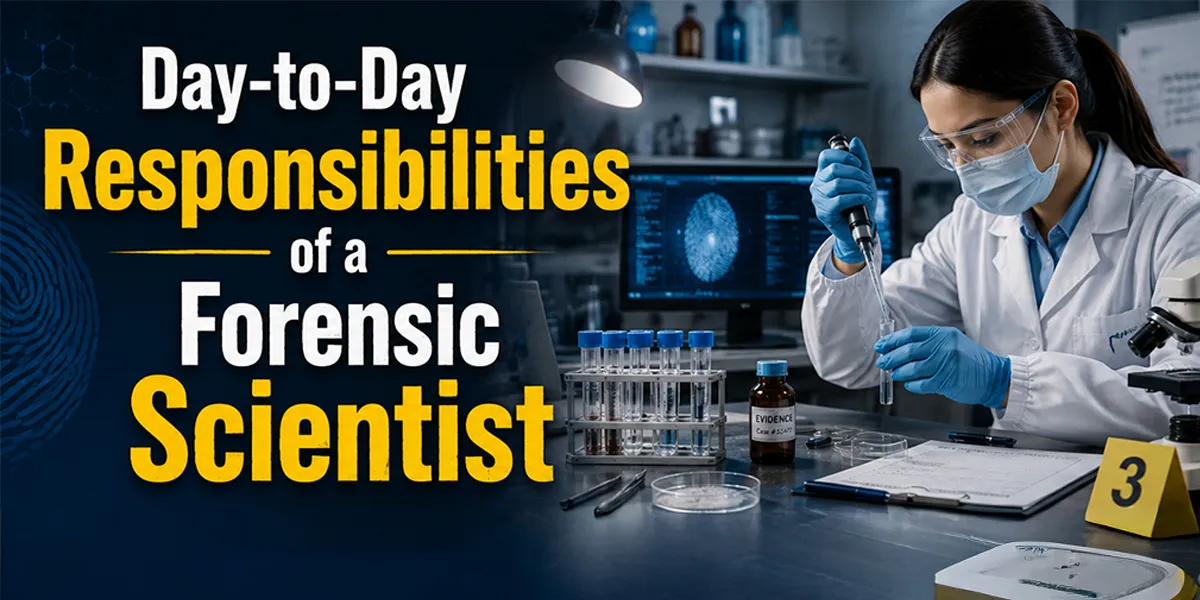
Forensic science is one of the intriguing fields of science that draws attention naturally. And the credit goes to shows like Dr. Stone, Breaking Bad, Crime Patrol, Savdhaan India, and more.
The way these shows dramatized forensic experts and made it a part of pop culture made people inspired and curious about this field or profession. Now most people want to know what forensic scientists really do. What are their responsibilities? And how much they earn.
What is a forensic scientist?
These are the professionals who utilize scientific methods and techniques to investigate and analyze the evidence linked with criminal cases. Basically, characters like Dr. Salunke in a popular television drama, C.I.D.
They work with government and law enforcement agencies and help them to uncover the details of the crime or incident. Most of their time they spend in their laboratories specializing in various disciplines such as toxicology, ballistics, fingerprint, DNA analysis, forensic anthropology, etc.
Their main job is to find out the truth behind a crime. Since their findings are based on scientific techniques, their testimony becomes crucial in court, where they provide detailed insights and help judges and juries reach a proper decision.
Different types of forensic scientists
Since forensic scientists belong to different areas of specialization, the role and responsibilities of a forensic scientist depend upon the area of forensic science you would like to work in. Here, take a look at three main areas of forensic science:
1. Biology
In this, your work is most likely related to crimes against people such as rape, murder, assault, and more. These are criminal offenses of a serious nature. You might end up with tasks like DNA testing, examining hair, blood, and clothing fibres.
2. Chemistry
Chances are you will be connected with criminal cases against property such as burglary, arson, and so on. Being a forensic scientist, you will deal with duties like examining substances such as glass, chemicals, paint, etc.
3. Toxicology
Finding drugs and poison with the help of scientific tests related to blood, urine, etc. All this is to find the truth and details of criminal cases that involve detection of poison, drugs, alcohol, and so on. Professionals who choose this path often go on to explore career options in forensic toxicology.
Duties and responsibilities of a forensic scientist
Forensic scientists don't confine themselves to laboratories; they have various duties and responsibilities to fulfill. Let's take a look at them:
1. Participating in criminal investigation
One of their major responsibilities is to take part in criminal investigations so that they can gather the evidence, preserve the crime scene, document findings, and analyze and interpret different patterns or circumstances present at the crime scene. So that they can prove beneficial to the law enforcement agencies in the solving of a case.
In high-profile cases, they have to go to the extent of recreating a crime scene. You have heard mostly about it when any case gets transferred to the CBI.
2. Evidence analysis
After collecting evidence, what comes next? None other than analyzing it, which involves detailed analysis of different types of evidence such as biological samples (DNA), ballistics, drugs, digital data, and more.
Based on the case and their findings, a forensic expert needs to go through these processes in order to find out the link between victims, suspects, and crime scenes.
3. Preparing scientific reports
The next step is to prepare detailed reports after completing their examinations. In this detailed report, forensic scientists will explain their findings scientifically and precisely, following a proper forensic report writing format.
This will help investigators to uncover the details of the crime and solve the case as quickly as possible. The importance of a scientific report is such that it can be used by investigators, prosecutors, defense attorneys, and judges.
4. Testifying in court
More often than not, forensic scientists need to present as a witness in the courts. They need to explain their scientific findings in simple and understandable language in front of judges, juries, attorneys, and other legal professionals.
Since scientific findings are in complex language, their presence in court is needed so that judges and legal professionals can understand the significance of the evidence presented.
5. Collaboration
Since forensic experts are of different specializations, they need to collaborate with each other as well. Local law enforcement agencies or investigators become mediators and communication links to integrate findings and contribute to collective investigative efforts.
For example, a forensic scientist who specializes in ballistics might need to collaborate with the one who specializes in fingerprint analysis.
6. Staying updated with the latest advancements
New emerging areas like cyberscience and digital forensics give birth to circumstances that make it necessary for forensic professionals to engage in research and development activities, adapt to new technologies, develop new techniques, and make contributions to raise the quality bar in the field.
There should be no compromise in quality control and assurance. Strict quality measures should be there to ensure the reliability, reproducibility, and accuracy of forensic analysis.
What are the different types of tools that forensic scientists utilize?
Pursuing a career in forensic science gives you the opportunity to try out some of the fascinating tools and equipment. Here are some of them:
- DNA sequencer
- High-powered microscopes
- CAD (computer-aided design) software
- Footprint filters
- Immunochromatography
- Biological kits for evidence collection
- Photo imaging software
Conclusion
No matter how popular crime shows sensationalize or dramatize forensic scientists or experts, in reality, they do more than just conduct experiments. Their findings and scientific analysis greatly help law enforcement agencies in identifying and apprehending criminals.
Their roles and responsibilities are diverse, ranging from collecting evidence and writing reports to giving testimony in the courtroom to ensure justice is served. If you are someone who is passionate about science, has attention to detail, and wishes to pursue a career in the criminal field, then a forensic scientist might be the right career option for you.