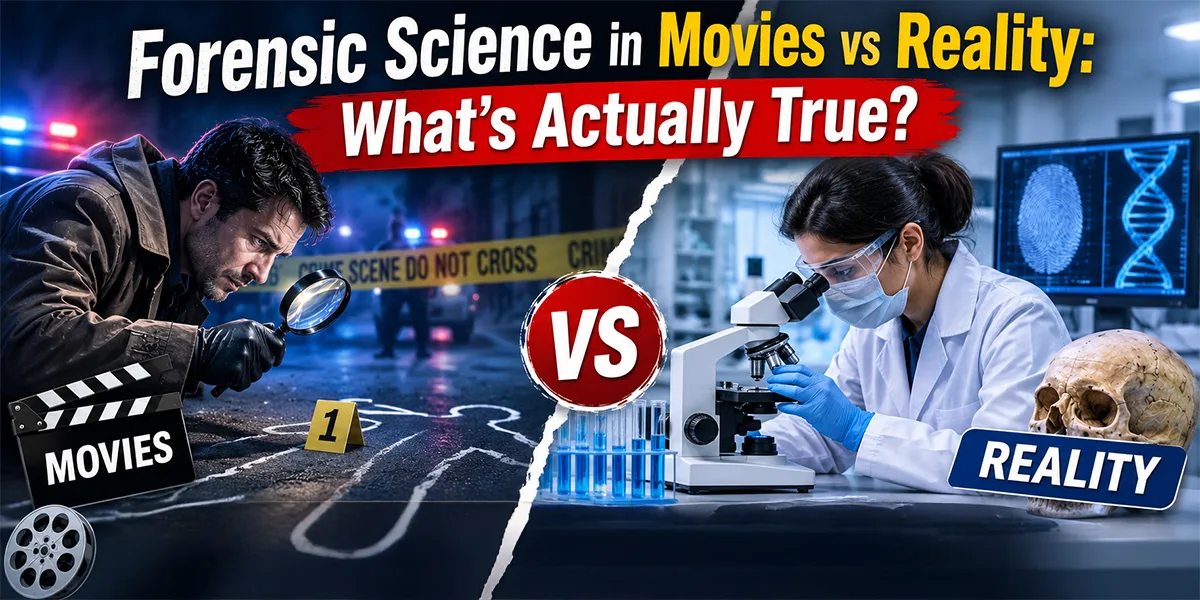
Whenever someone gains knowledge of forensic investigation and its processes through television, a lot of misconceptions become part of mainstream culture. One of them is that forensic processes can be completed within a few hours, but the reality is that they can take weeks or even months. Television shows compress forensic processes into a single episode. DNA analysis in a high-quality lab can take months to produce results, but on TV it is shown happening in a few minutes.
This brings us to the leading question: how much of what is shown in movies or on television is actually true? In this blog, we will shed some light on the subject and dispel some of the myths about forensic science shown on television.
Top myths related to forensic science
1. All crime scenes are processed for evidence
Not all crime scenes receive the same amount of attention as shown on television. What people don’t know is that a complete forensic workup takes time. Sometimes, due to limited resources, law enforcement agencies or the police prioritise more violent crimes, which have higher chances of evidence being available, over petty crimes like theft.
2. A single piece of evidence is enough
Another myth portrayed in crime shows is that a single piece of evidence can crack a whole case. But the ground reality is that conclusions are hardly ever drawn on the basis of a single piece of evidence. To avoid wrongful conclusions, multiple pieces of corroborative evidence are examined to ensure accuracy. Environmental factors like weather, time, and exposure can also alter evidence, making comprehensive analysis essential.
3. Crime scene professionals turn off their emotions when they are on the job
Movies and television-based forensic dramas show forensic or crime scene professionals as some kind of robots that don’t have any sensitivity or emotions. What viewers don’t realise is that, due to their consistent exposure and experience in the field, professionals get used to it. Even so, cases of PTSD or trauma are frequently seen among professionals in this industry.
Many crime scenes are extremely violent or vicious – gunshot wounds, blood on the floor, fractured skulls, limbs, and so on. Not everyone can handle these gruesome scenes.
4. Forensic evidence is always infallible
Another widespread myth or misconception is that forensic evidence is always infallible. Yes, it’s true that forensic science is powerful, but it is not without its limitations. The forensic investigation process goes through various stages, like the collection, processing, and interpretation of evidence. The important thing is that, in the initial stages, forensic conclusions are probabilistic rather than absolute. Results are impacted by the quality of evidence, the available reference samples, and the analytical situation.
5. All forensic experts are degree holders
Popular culture portrays forensic professionals as degree holders in forensic science and related fields. But one must remember that this is not the only pathway into the profession. Some roles can be accessed through specialised diplomas, certifications, or technical training programs. Beyond theory, practical skills, experience, and professional development are equally important in forensic careers.
Conclusion
Movies and television have introduced many people to forensic science, but they often simplify the methods and timelines involved in real investigations. DNA profiling, fingerprint examination, chemical analysis, and digital forensics can provide valuable evidence, yet each has limitations that scientists must understand and communicate.
Real forensic work depends on careful observation, validated methods, reliable documentation, and objective interpretation. It also requires professionals to recognise uncertainty rather than force the evidence to fit a convenient explanation.
For students considering a career in forensic science, the reality can be just as intellectually rewarding as its fictional portrayal. The field offers opportunities to apply scientific knowledge to real-world questions while contributing to investigations through accuracy, critical thinking, and evidence-based reasoning.