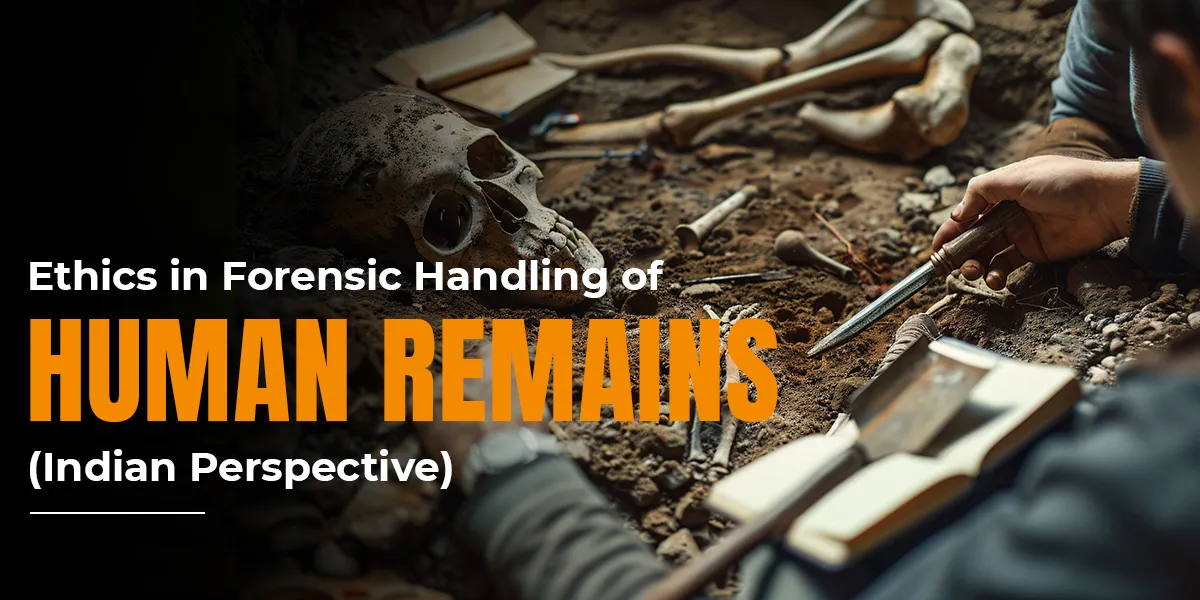
Forensic science plays a very important role in the criminal justice system, in which investigators identify victims, determine the cause of death, and reconstruct events surrounding a crime. Among its many disciplines, forensic anthropology and forensic pathology often involve the examination and handling of human remains.
While the scientific value of such examinations is undeniable, the process also raises significant ethical concerns. Human remains represent individuals who once lived and had families, cultures, and identities. Therefore, their handling must be guided not only by scientific rigor but also by moral responsibility and respect.
In India, ethical considerations surrounding human remains are shaped by legal frameworks, cultural diversity, religious beliefs, and humanitarian values. Ethical forensic practice ensures dignity for the deceased, respect for families, and integrity in the justice system.
Understanding Ethics in Forensic Science
Ethics in forensic science is all about the moral guidelines that guide how professionals act and make decisions. In this field, being ethical means having assurance that the scientific work remains honest, respectful, and within the boundaries. Dealing with human remains is particularly sensitive, and it also demands a lot of integrity from forensic experts since their work impacts legal outcomes and provides closure for the grieving families.
Forensic anthropologists and investigators need to be honest and clear while they handle the human remains. They have to treat the deceased with respect and also honor the rights and beliefs of their families. They mustn't misrepresent their findings or show any disrespect, as public trust in forensic science relies heavily on ethical behavior.
Ethical principles in handling human remains
1. Respect and Dignity for the Deceased
Treating human remains with genuine respect, that's how it works. These are not just pieces of evidence, but they belong to people who once had lives, families, and stories. It is important to handle them carefully, store them properly, and examine them without causing any unnecessary harm. Forensic professionals need to be gentle, avoid causing damage, and ensure everything is documented correctly. Using respectful language and preserving remains thoughtfully is part of honoring the dignity of those who've passed.
2. Respect for Families and Communities
Identifying human remains isn't just a technical task; moreover, it's deeply personal for the families who are left behind. Forensic experts have to approach grieving relatives and communities with real sensitivity. Sharing results and information must be done clearly and with compassion. Especially in India, where religious and cultural practices around death are intense and specific, families expect nothing short of respect for the deceased. Mistakes, delays, or disrespect can trigger serious distress in the public.
3. Integrity of Evidence
Human remains play a key role in criminal investigations, and keeping that evidence intact is essential.
- Forensic experts have to stick to a strict chain of custody, carefully moving through every step, and use sound scientific methods when examining the remains.
- Basically, there's no room for sloppy work; mislabeling, contamination, or careless handling can derail a legal case in no time.
- That's why these professionals follow detailed protocols to make sure the evidence stands up in court.
4. Cultural and Religious Sensitivity
India's diversity shows up clearly in the way people handle death:
- Hindus usually cremate, Muslims and Christians bury, and many tribal groups have their own traditional methods.
- Forensic work needs to recognize and respect these differences.
- When investigators identify disaster victims or exhume bodies, they should talk with community leaders, the right authorities, or families before moving forward.
- Making sure people feel heard builds trust and lets the forensic team do their job without unnecessary conflict.
5. Confidentiality and Privacy
Forensic work touches on sensitive details about the dead and their families:
- Professionals have to keep this information private because they can't share photos, reports, or anything identifying without the proper permissions.
- Publishing images or personal data without a good reason crosses a line and can really hurt the families involved.
- Good ethical practice means balancing the need to share scientific findings with the duty to protect people's privacy.
Ethical forensic work in India: A Legal framework Governing Human Remains in India
It isn't just about good intentions, but it's also backed by laws that lay out what's right and what's expected.
The Code of Criminal Procedure (CrPC)/BNSS
It spells out how people should handle inquests and postmortems after suspicious or unnatural deaths. It keeps investigations legit and makes sure nobody forgets the basic respect owed to the deceased.
The Bharatiya Sakshya Bill, 2023 (BSB)
When forensic experts get information from human remains, it is all because of this act that allows them to present their findings in court. It's not just about science, but it's about the ethical handling of remains that makes those findings reliable and trustworthy.
The Transplantation of Human Organs and Tissues Act (THOTA) 1994
These steps are used when organs and tissues are used medically. Everything comes down to consent and doing things the right way, so nobody takes shortcuts.
The National Disaster Management Guidelines
In case of any mass destruction like earthquakes, floods, fire, and so on, ethical protocols guide what should happen with human remains in those chaotic situations, making sure every person is treated with dignity, no matter what.
Altogether, these laws don't just set rules. They push forensic professionals to stick to their ethics and stay sharp, even under tough circumstances.
Ethical challenges faced in India
1. Mass Disaster Situations
India deals with frequent natural disasters and major accidents. When this happens, professionals have to manage a large number of human remains, which gets complicated. But the question arises about how to properly identify, store, and return bodies to families with the respect they deserve.
2. Limited Infrastructure
In many parts of the country, forensic labs and trained workers are in short supply. Overcrowded mortuaries, poor storage conditions, and slow autopsies can make it hard to maintain ethical standards, even with the best intentions.
3. Media Sensationalism
It's not rare for the media to share disturbing images or details from crime scenes. When that happens, the privacy of victims and their families gets overlooked, turning a deeply personal tragedy into a public spectacle.
4. Handling Unclaimed Bodies
Unidentified or unclaimed bodies present a difficult choice. There's the right to dignity, questions about using remains for study, and the legal obligations around storage and burial or cremation. It's a balancing act that's never easy.
Best Ethical Practices in Forensic Handling
To tackle these issues, certain practices need to be nonnegotiable:
- Proper Training: Professionals should know both the technical skills and the ethical side of handling human remains.
- Standard Operating Procedures: There should be clear rules for how remains are recovered, moved, examined, and stored.
- Careful Documentation: Keeping thorough records helps protect the evidence and keeps things transparent.
- Cultural Consultation: It helps to talk to families and community or religious leaders when special customs or beliefs are involved.
- Confidentiality: Sensitive facts and images must be protected, not shared carelessly.
- Respectful Disposal: After all examinations, remains should go back to families or, if that's not possible, be handled according to the law and local traditions.
Conclusion
Ethics plays a crucial role in forensic science, especially when dealing with human remains. In India, cultural and religious beliefs play a huge part in how death is viewed, which only makes the ethical duty heavier. Professionals owe compassion to families, respect for the dead, and a commitment to preserving evidence and following the law.
As forensic science grows in India, better rules, stronger labs, and better training have not just improved, but they have become a promise to treat every case with humanity. In the end, ethical forensic practices help deliver justice and also show that society respects the dignity of every person, even after death.